Culture and team
Let’s shift from the individual to the collective. So far we’ve discussed how you can grow as an engineer; now we’ll look at how you can help your team level up.
First, understand that the group comes before the individual—always. You’re players on the same team, with a shared goal. Collaboration is fundamental.
Passion and love for what you do
Passion is an individual quality that only works when the team is in tune. Working with passion means doing things for more than a paycheck. It’s polishing the UI and aiming for pixel‑perfect. It’s going the extra mile and delivering more than expected to craft a sublime product people want to use.
Many people avoid this. They fear being judged for loving their craft or being disappointed by their project. Those concerns are valid, but we shouldn’t feel judged for contributing value to the world—building things that help us grow. We should be proud of it.
Spreading a frontend culture
Vercel is a company founded by Guillermo Rauch that helps developers and teams with continuous deployment. Beyond its capabilities, it’s a pleasure to wander through their site—microinteractions that delight and flows that make even your phone’s Contacts app feel clunky.
There are other companies in this space, like Linear. Teams like Vercel’s and Linear’s don’t just have great product designers—they have great frontend engineers working hand‑in‑hand with strong principles. And they make it clear:
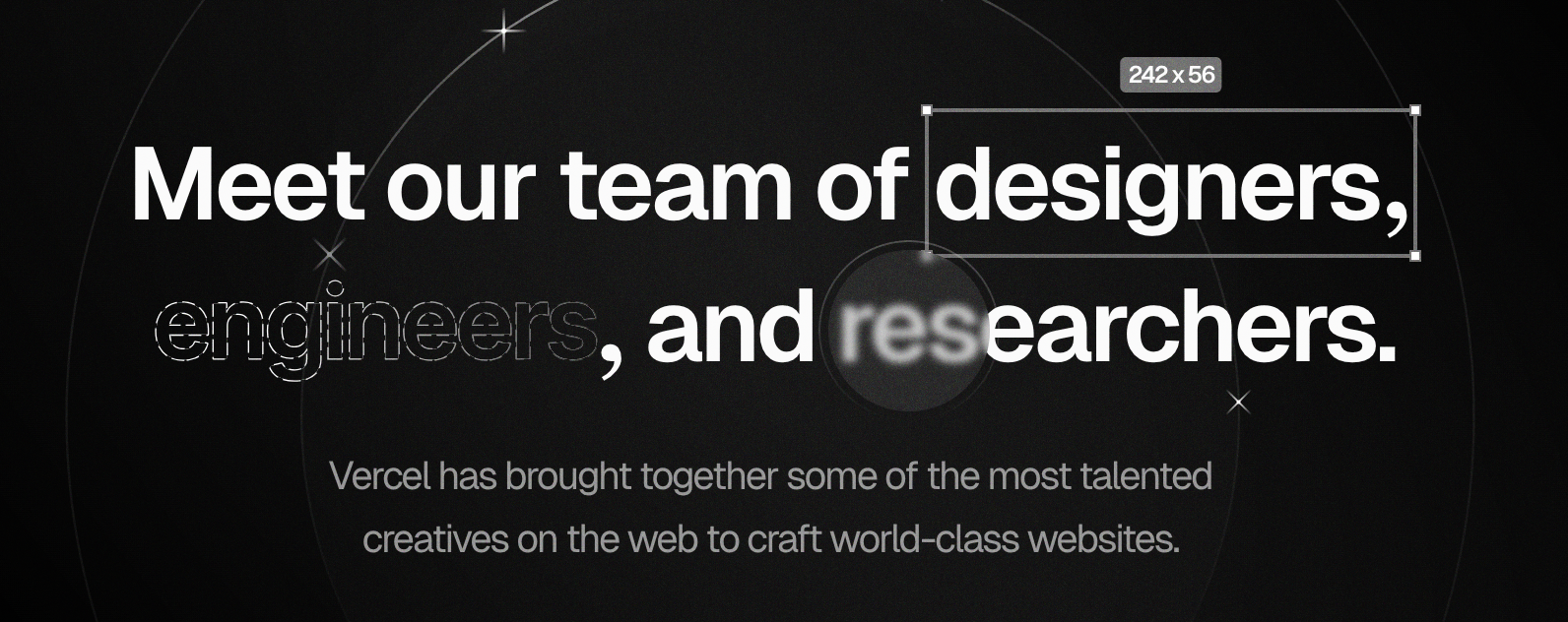
Context matters. Vercel and Linear serve thousands or millions daily—this differs from internal tools or niche B2B.
- Geist: Vercel’s design system
As discussed in the design chapter, beauty matters. We’re hard‑wired to prefer what pleases the eye, even when it isn’t the “best” option. That’s why a culture of beauty and usability should run across the team (ideally the entire organization). Principles like “development isn’t done until a fresh user tries it and gives feedback” lead to polished, understandable interfaces.
Interfaces exist to facilitate interaction with computers. They help maximize productivity—and they are art and design. Striking the balance isn’t easy, but it’s essential. Make your app feel like Vercel, Linear, or an Apple device.
Motivation
Keeping teams motivated is hard (very hard). With Gen‑Z engineers—often more easily frustrated but highly motivated—the challenge grows.
Sometimes the wind will be at your back and you’ll be in flow; other times you won’t be happy with your work or the product’s direction. As usual, communication matters most. If someone isn’t comfortable, it’s better to share with the team. Sometimes the problem can be solved; other times not. Know when long‑term demotivation means it’s time for a change. Before that, try:
- Side projects: morale boosters where you control direction—no deadlines or managers pushing disagreeable work.
- Propose spending time on adjacent topics during work hours (a “workday side project”). Maybe e2e tests or your CI needs love and those motivate you. Few managers will reject time spent on improvements that benefit the team.
- Get inspired by others. Follow people who do what you do. Our field has many who share projects, designs, side projects, and day‑in‑the‑life vlogs.
- Change something in your workflow. Change can bring satisfaction. Use lower‑motivation days to tweak your process to be more productive and valuable. Maybe join design sessions or dig deeper into roadmapping with the PM.
Whatever you do, remember the principles from the introduction. Some weeks are tougher than others, but with a solid foundation, it’s a matter of waiting for the wind to change.